If your clinic is sitting at the top of Google Maps, you feel like you've won the local game. The reviews are there, the phone is ringing, and patients are finding you. Then someone says, "I asked ChatGPT for a good dentist, and I couldn't find you."
That moment is confusing because you think: "If Google knows us, shouldn't AI know us too?" Actually, that is not always true.
We've all got used to thinking about search as a list. A patient types something into Google, scans a few results, checks the map pack, reads reviews, and makes a choice. That pipeline still exists, but it is no longer the only one. More and more people are now asking an assistant directly, whether that's ChatGPT, Google AI Overviews, Perplexity or Gemini, and getting a completely different kind of answer back. They get a direct recommendation, not a list to sort through themselves.
That sounds subtle, but it changes everything. A search engine can afford to show a long list. An AI assistant usually narrows the field, names a few clinics, and moves on. If your practice is not one of those names, being on page one of Google does not help as much as you think.
This shift is more important than it seems at first glance, because BrightLocal's 2026 data found that 45% of consumers now use AI to find local services, up from 6% a year ago. Today that's proof of how patients are starting to look for help.
Your patients now search in two places
The mistake most clinics make is assuming that online visibility is still one system when it is not.
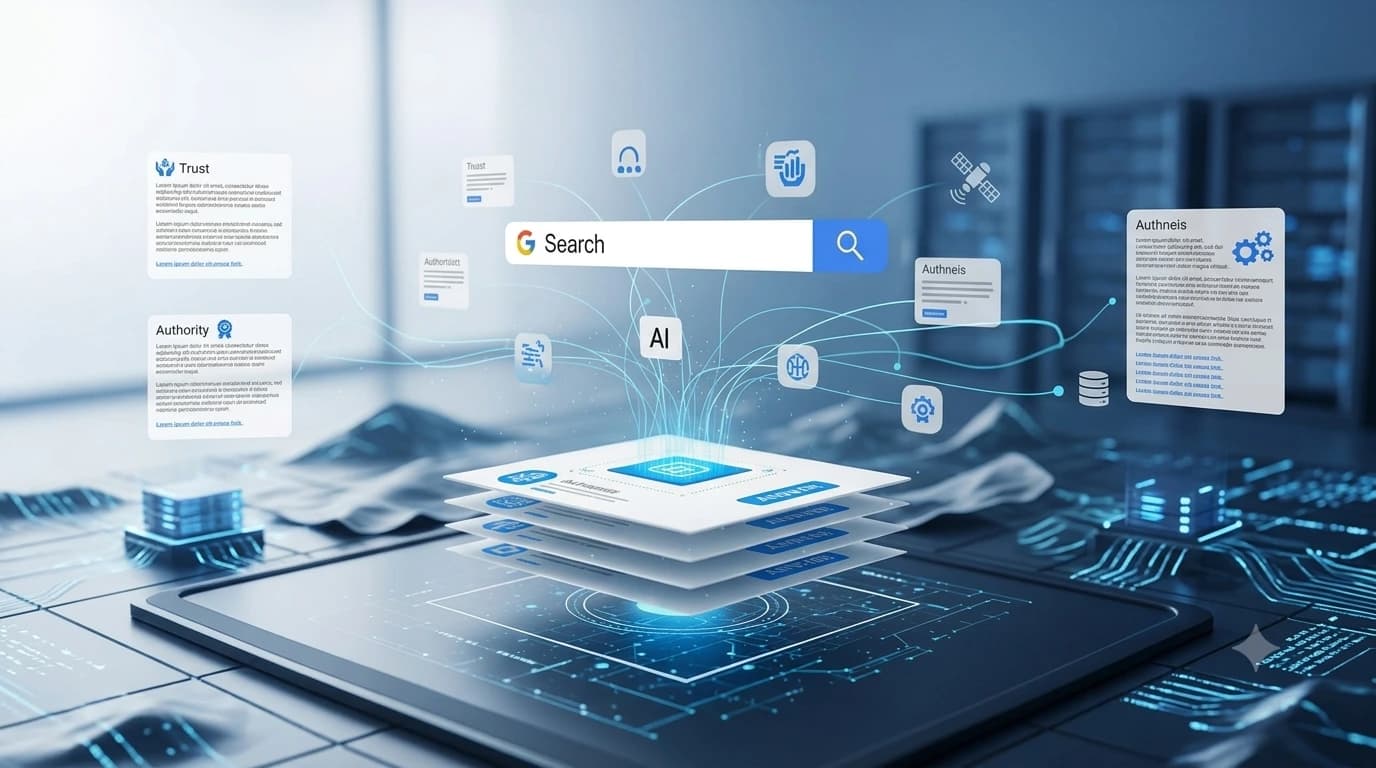
In the old model, the goal was simple: show up in Google Search, win the map pack, collect strong reviews, and make sure the website looks credible. Those signals still matter. But AI assistants do not work like a traditional search results page. They gather information from multiple sources, compare what they find, and only recommend a clinic when the evidence lines up.
That means the question is no longer just, "Do we rank?" It is, "Can the assistant confidently recognize who we are?"
That second question is where many practices fail. AI systems need to be able to read your clinic clearly, across trusted sources, and see the same story wherever they look. If the information is inconsistent, incomplete, or too thin, the assistant has less reason to name you. Simply said, AI has to trust that you are exactly who you say you are, and it has to see that repeated in enough places to feel safe recommending you.
Why Google strength doesn't transfer
This is the uncomfortable part for a lot of owners: strong Google performance does not automatically carry over into AI recommendations.
SOCi's 2026 Local Visibility Index found that more than half of businesses that lead on Google don't appear in AI recommendations at all. That means a clinic can be performing well in the system everyone understands and still be missing from the one patients are increasingly using. Being strong on Google only gets you part of the way there.
SOCi also found that ChatGPT recommends only about 1.2% of all local business locations. That number is so small that it changes the whole mindset: the assistant is not "listing" the market, it is selecting from a tiny shortlist. Reviews and local ranking help but do not guarantee a seat at that table.
Local businesses are no longer trying only to appear; they are fighting to be chosen. And being chosen depends on whether the specialty, location, services, and reputation are easy to understand without guesswork, so that an assistant can repeat them without hesitation.
What this looks like in practice
We recently audited a clinic that looked strong by any normal local SEO standard. It held the number one position in its city's map pack and had more than 200 five-star reviews.
But when we asked ChatGPT, Gemini and Google AI Overviews for the best implant clinic in that city, the practice appeared in only one of the three responses. That is the gap in real life.
From the clinic's point of view, nothing looked broken. From the patient's point of view, though, the clinic was not present in all the places that now matter. The problem is that you can be doing well in the channel you understand and still be invisible in the one your future patients are starting to use.
The opening, not the threat
This is not a reason to abandon the old game. Google Search and Maps still matter. Reviews still matter. A well-built website still matters. None of that goes away. But AI visibility is now a separate scoreboard, and most clinics have not started playing on it yet.
Optimization for AI search is an opening. If your competitors are still treating AI search as a novelty, you have a chance to get ahead before they realize how much of the patient journey has changed. The practices that win here will not necessarily be the loudest ones but the clearest ones: the clinics that make it easy for AI systems to understand who they are, what they do, and why they should be recommended.
A simple next step
If you are wondering whether ChatGPT, Gemini and Google AI Overviews can actually find your clinic, the most useful place to start is with a check. Our free AI Readiness Audit shows where you stand today and gives you an AI Readiness Score, so you can see whether your practice is being recommended, or missed, in the places that now shape patient discovery.
The next time a patient asks an assistant for a good dentist, you want to be the name it gives.